December 8, 2025
Can you tell us about your background and what motivated you to pursue an internship on the EMERALD-Lewy project?
I’m an undergraduate student in the US, studying neuroscience. I was looking for an opportunity to gain clinical experience while also discovering a foreign city and its culture. I’m still in the process of figuring out what I want to do with my neuroscience degree, so this was a great exposure to clinical work with dementia patients, and it showed me what a career doing research may look like. My initial communications with the team were warm, and I knew I would be welcomed and taken care of for the summer.
What specific projects or tasks were you involved in during your internship?
I was involved in multiple tasks, allowing me to explore different aspects of the big project. I was entrusted with making a data management plan for the EMERALD-Lewy project, essentially pulling together information on how data will be collected and stored for each of the 10 work packages. This was rewarding because I got a glimpse into each work package, seeing the project from a distance.
Another major task was helping Dr. Frau with patient screenings for her part of the project. Essentially, I used patient records to fill out a proforma to organize data for future dissection about diagnostic pathways. This was really interesting for me because with around 40 patient files, I could see how different types of dementia arise in different ways, and how the diagnostic pathway is unique to each patient.
Lastly, I was able to shadow Dr. Frau with a few patient assessments and Dr. Leroi in patient appointments.
Can you share a particularly memorable or rewarding moment from your internship?
In terms of the internship itself, I remember feeling really accomplished and appreciated when I finished the patient screenings for Dr. Frau. This was just one example of how warm the team is, making me feel valuable and like I truly contributed to the research.
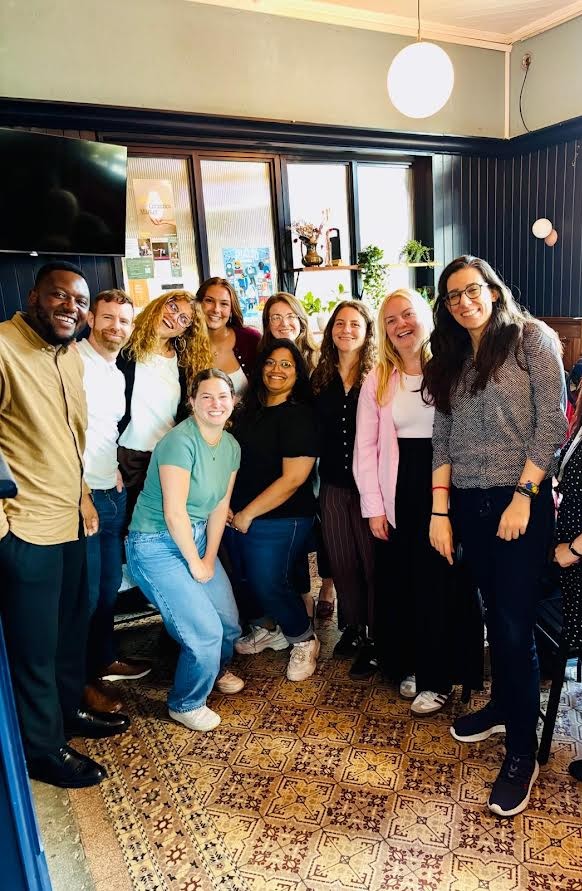
Outside of the workplace, a truly memorable experience was when Dr. Mohan invited me out to dinner towards the end of my summer, just to get to know me outside of work. We had a really lovely meal, and Dr. Leroi even took time out of her insanely busy schedule to stop by and wish me luck for my future. I could tell everyone on this team truly cares about each other and supports one another, not just in the office.
How did working in this research environment influence your understanding of the field?
This was my first experience with clinical research, having worked with mice in the past. This experience showed me how impactful the research is. It’s really rewarding to see the data being implemented in treatment, and how the field improves before our eyes. Seeing the direct impact on the patients definitely increased my appreciation for work in research.
What skills or knowledge did you gain that you hadn’t had before?
I definitely had no idea how to do a data management plan when I started. It was a daunting task, but everyone was there to guide me. I learned the steps it takes to get ethical approval for a study, how to implement confidentiality in studies with humans, and the importance of correctly storing data.
I also learned so much about Lewy Body Dementia as a disease. Meeting and screening patients exposed me to how the disease can vary in manifestations and deterioration.
In what ways has this internship influenced your future academic or career goals?
I’ve developed a newfound passion for working with dementia patients, witnessing the profound impact this work has on such a vulnerable population. I also decided that I want to take this warm camaraderie in the work environment wherever I end up.
Do you have any advice for other undergraduates considering a research internship?
Do it! There is nothing bad that can come from a new experience, especially when the work you’re doing will truly help people. Internships, especially abroad, give you experience in new work dynamics and cultures, and can teach you so much about yourself.
How did this experience compare to your expectations before starting?
I honestly had no idea what to expect going into my summer. I wasn’t sure how much of my time would be spent interacting with patients, if I would be working on one task the whole summer, or if I was just going to get people coffee and take notes. Regardless of my (lack of) expectations, I could not have asked for a better experience. Everyone was eager to hear my input on what I was interested in doing.
My supervisors made sure I had a variety of tasks to expose me to all aspects of the project. And I was welcomed into the team socially, which truly made all the difference.